

Business Loans in India: How Small Businesses Can Borrow Smartly
Small businesses often need money before the cash actually arrives. Alarge order may require stock today, while the customer pays weekslater. A machine may improve capacity, but only if the business cancarry the EMI…

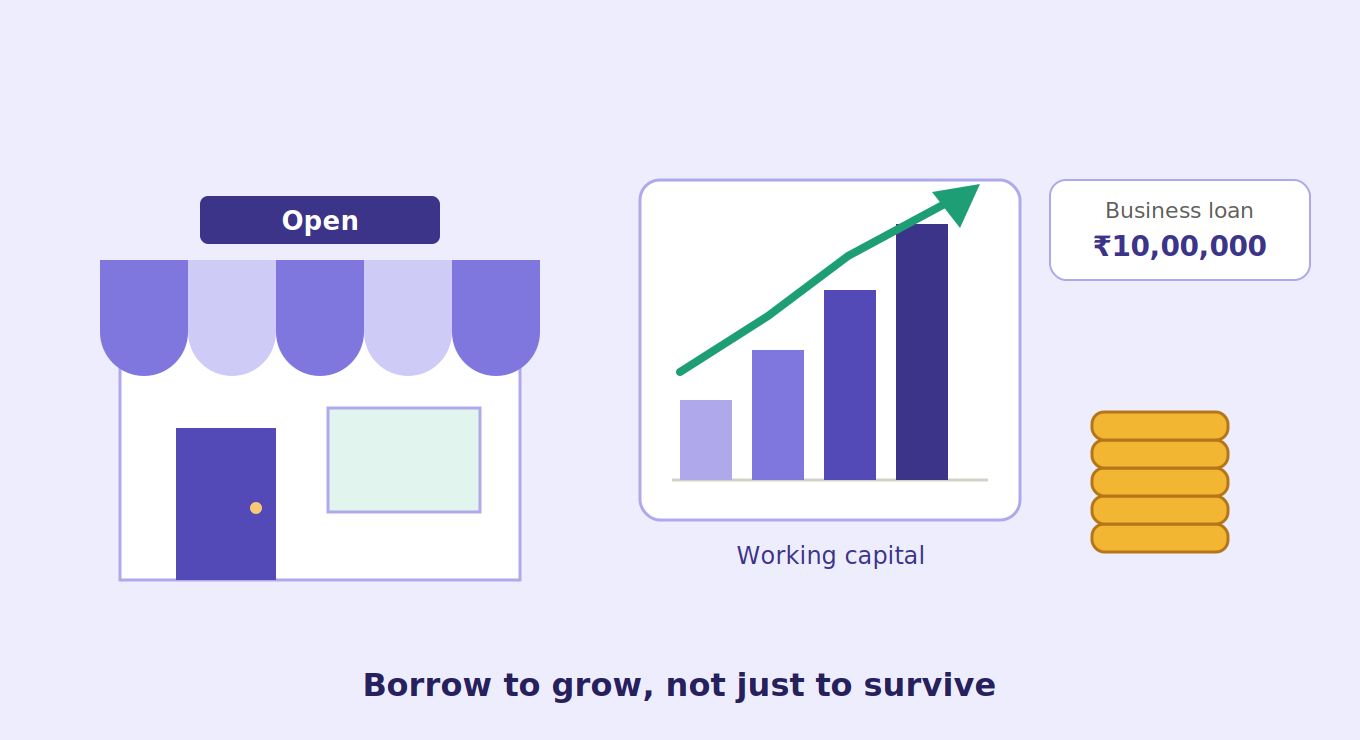
Small businesses often need money before the cash actually arrives. A
large order may require stock today, while the customer pays weeks
later. A machine may improve capacity, but only if the business can
carry the EMI while it waits for the extra revenue. That is the
practical side of a business loan.
Key takeaways
- Match the loan to the need: working capital for day-to-day cash
flow, a term loan for equipment or expansion. - Rates often range from about 10% to 24% or more, depending on your
profile and whether the loan is secured. Compare the APR and fees,
not just the interest rate. - Government-backed options such as MUDRA and credit guarantee schemes
can help small borrowers avoid collateral. - Borrow only if the money will earn more than the loan costs, and
keep your business and personal finances separate.
“A business loan should make money, not just move money.”
Every small business owner knows the feeling. A big order arrives but
the raw material has to be bought upfront. A customer pays 60 days late
while your supplier wants payment in 15. The shop needs new shelving
before the festive season, and the cash is tied up in stock.
A business loan exists for moments like these. Used well, it turns a
good opportunity into growth. Used badly, it turns a slow month into a
crisis.
The main types of business loans
- Term loan. A lump sum repaid in EMIs over one to seven years or
more. Best for equipment, renovation or expansion. - Working capital loan. Short-term funding for daily operations such
as stock, salaries and rent. It may come as an overdraft or cash
credit line, where you pay interest only on the amount you use. - Equipment finance. A loan for a specific machine, often secured by
the equipment itself. - Invoice financing. You get an advance against unpaid customer
invoices, which helps when payments are slow. - Unsecured business loan. No collateral, often offered by banks and
NBFCs to businesses with a stable record, at a higher rate. - Government-backed loans. Schemes like MUDRA offer loans to micro and
small enterprises, often in three bands (Shishu, Kishor and Tarun)
depending on the amount. There are also credit guarantee schemes
that let banks lend to eligible small businesses without demanding
collateral.
Who qualifies
Lenders want to see that the business can repay. They often check:
- Business vintage. Many want one to three years of operations.
- Turnover and profit. Proven through GST returns, bank statements and
income tax returns. - Credit history. Both your business and personal credit scores
matter, especially for smaller firms. A score of 700 or 750 and
above helps. - Registration. Udyam registration, GST registration and other proof
that your business exists and operates legally. - Repayment capacity. Lenders want to see that your cash flow can
comfortably cover the EMI. - Collateral or guarantee. Required for larger secured loans, and
sometimes a personal guarantee even for unsecured ones.
If you are a new business with little history, government schemes, a
co-applicant or a smaller starter loan can be a stepping stone.
What it costs
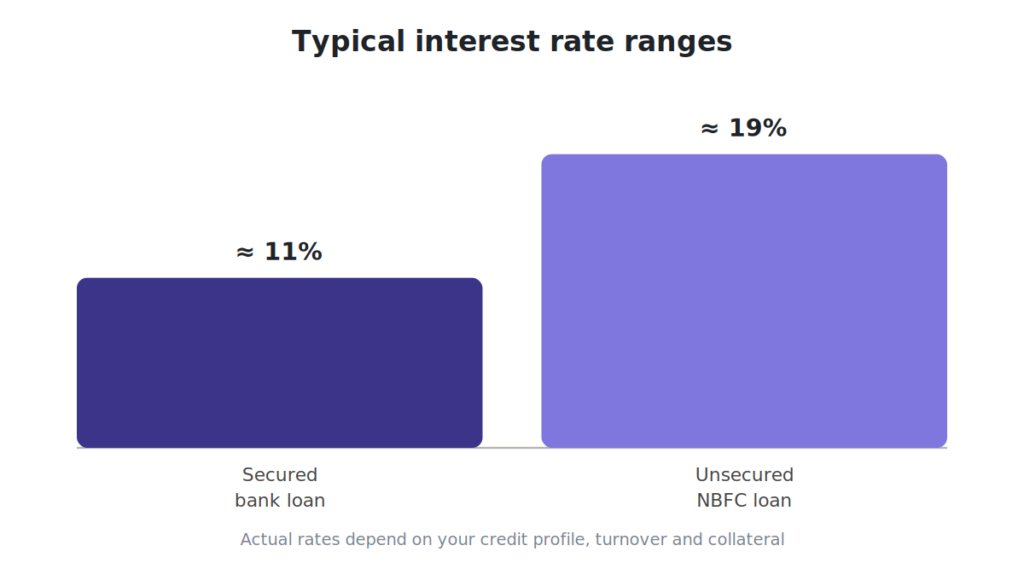
Interest rates vary a lot. Secured loans from banks may start around
10–12%, while unsecured loans from NBFCs and fintech lenders can run
from about 15% to 24% or more. Loans linked to government schemes may
carry concessional terms.
Consider a ₹10 lakh loan at 15% for three years. The EMI is about
₹34,700. You repay roughly ₹12.5 lakh in total, so the interest is
around ₹2.5 lakh. That is a real cost, so the loan needs to earn more
than that for the business to come out ahead.
Fees matter too. Look for the processing fee (often 1% to 3% plus GST),
documentation charges, prepayment or foreclosure charges, and late
payment penalties. Ask for the total cost, not only the interest rate.
Ask the profit question first
Before you sign, work out what the money will earn. If a ₹5 lakh machine
lets you fulfil orders that bring in ₹2 lakh of extra profit a year, a
loan costing ₹75,000 a year in interest makes sense. If the money simply
plugs a hole caused by weak sales, it will only postpone the problem,
with interest added.
A simple check is to ask whether your monthly business surplus, after
all existing costs, is at least 1.3 to 1.5 times the new EMI. Lenders
use a similar test, often called the debt service coverage ratio. If the
cushion is thin, borrow less or stretch the tenure a little.
Choosing the right lender
Public sector banks tend to offer lower rates but slower processing and
more paperwork. Private banks are faster and more flexible. NBFCs and
fintech lenders can approve within days but often charge more. Your
existing bank, where you already have a current account, is often a good
first call because it can see your transaction history.
Compare at least three offers on rate, fees, tenure, prepayment terms
and how they treat delayed payments. Confirm that any NBFC is registered
with RBI and that digital lenders disburse the money directly into your
business account.
How to apply
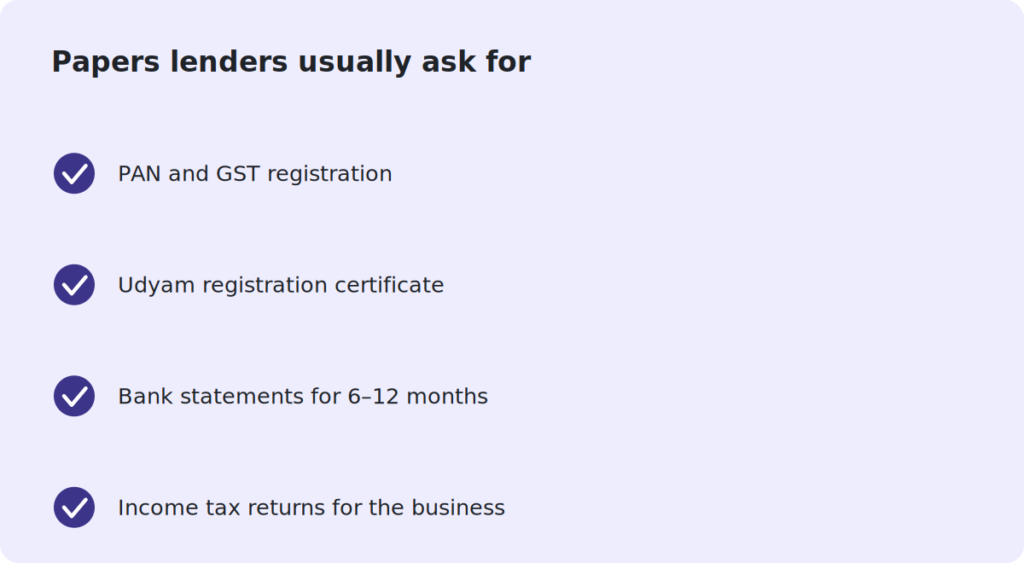
- Get your papers in order. Keep ready your PAN, GST registration,
Udyam certificate, bank statements for the last 6 to 12 months, and
income tax returns. - Decide the amount and purpose. Lenders like a clear plan.
- Check your credit reports. Fix errors before applying.
- Prepare a short business summary. Explain what the business does,
how it earns, why you need the loan and how you will repay it. - Apply to a few lenders, not dozens. Each application can leave an
enquiry on your report. - Read the sanction letter. Confirm the rate, fees, tenure and
conditions before accepting.
Plan repayments around your cash flow
Match the EMI date to when your money often arrives. If your customers
pay around the 10th, an EMI due on the 3rd will strain you every month,
so ask the lender whether the due date can be moved. Keep a reserve
equal to two or three EMIs in a separate account, and track receivables
weekly so a late-paying customer does not become your lender’s problem.
If you expect a slow quarter, tell your lender early. Many will
restructure or offer a short moratorium, but rarely after you have
already missed payments.
Mistakes that hurt small businesses
- Borrowing short and investing long. Using a working capital line to
buy machinery ties up the cash you need each month. - Mixing personal and business money. It confuses your records and
weakens your loan applications. - Chasing the lowest EMI. A long tenure lowers the EMI but raises the
total interest. - Ignoring seasonality. If your sales are seasonal, choose a repayment
plan that fits the low months. - Relying on informal or daily-collection lenders. Their effective
rates can be extremely high, and the terms are often unclear. - Skipping the fine print. Personal guarantees, penal interest and
hidden fees can hurt later.
Frequently asked questions
Can I get a business loan without collateral? Yes. Unsecured loans,
MUDRA loans and loans backed by credit guarantee schemes are available,
though rates for unsecured loans are higher.
Does my personal credit score matter for a business loan? Yes,
especially for proprietorships and small firms, because lenders view the
owner and business as closely linked.
Can I repay early? Often yes, but check for prepayment charges. Rules on
prepayment charges for business loans differ from those for personal
loans to individuals.
What is the difference between a term loan and an overdraft? A term loan
gives you a lump sum with fixed repayments. An overdraft lets you draw
as needed up to a limit and pay interest only on the amount used.
Key takeaways
A business loan is fuel, not a rescue boat. It works when it funds
something that earns more than it costs, when the repayment fits your
cash flow even in slow months, and when you have compared lenders and
read the terms. Borrow to grow, keep your accounts clean, and let the
loan serve the business rather than the other way round.
Editorial note: Rates, fees, tax rules and regulatory requirements can
change. Check the current terms that apply to you before acting.
Disclaimer: This article is for general information only and is not
financial, tax or legal advice. Rates, fees and rules change, so check
the lender’s or insurer’s current terms and consult a qualified
professional before you decide.
 Life Insurance
 in India: Why Term Plans Come First
 Mutual Funds
 in India: A Beginner’s Guide to Investing Through SIPs
 Bike Insurance
 in India: What Every Two-Wheeler Owner Should Know
 Home Loan
s in India: A Buyer’s Guide to Rates, EMIs and Hidden Costs
 Chit Fund
s in India: How They Work and How to Stay Safe
 Gold Loan
s in India: Quick Cash Against Your Jewellery, Explained
 Health Insurance
 in India: A Practical Guide to Choosing the Right Policy
 Credit Cards
Comments