

Health Insurance in India: A Practical Guide to Choosing the Right Policy
Nobody plans a hospital stay. It often arrives with a late-night phonecall, a rushed trip to the hospital and a bill that starts climbingbefore the family has had time to think. That is where…

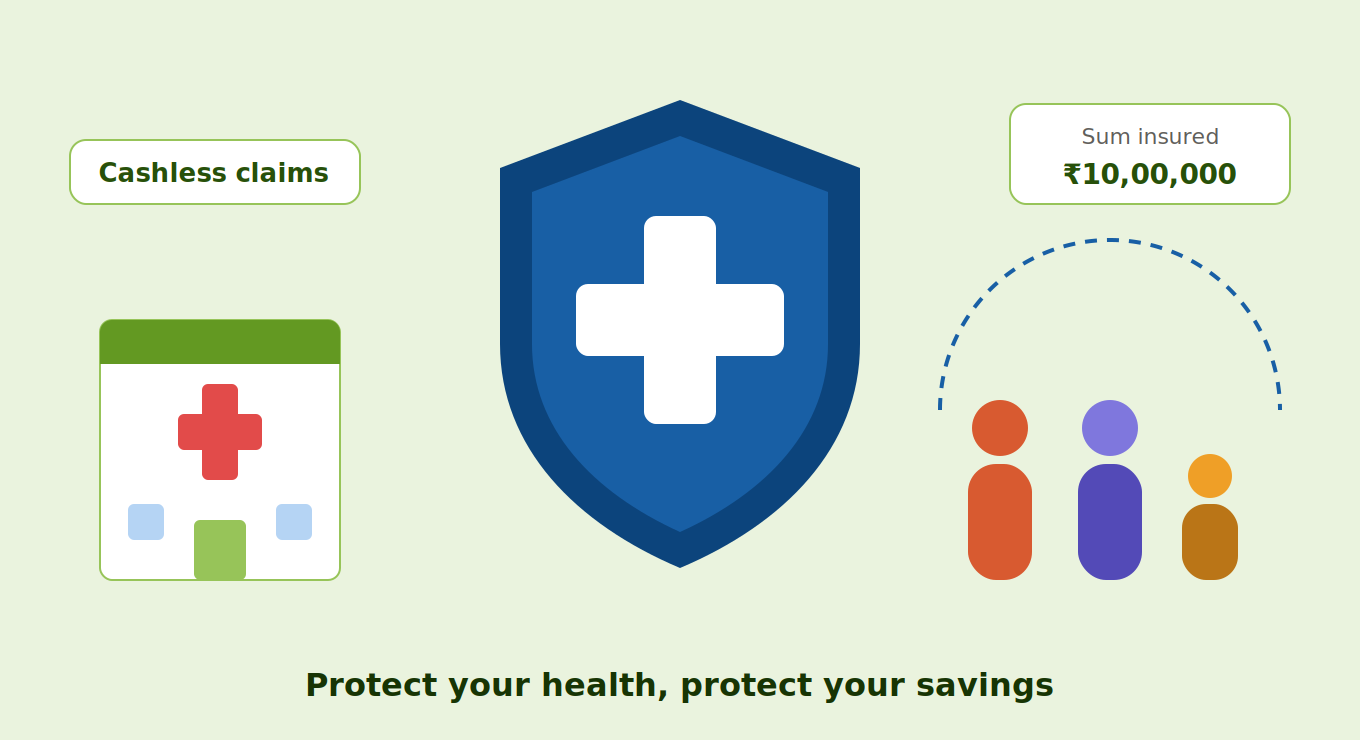
Nobody plans a hospital stay. It often arrives with a late-night phone
call, a rushed trip to the hospital and a bill that starts climbing
before the family has had time to think. That is where good health
insurance can make a real difference — provided you understand what the
policy actually covers.
Key takeaways
- Health insurance pays hospital bills up to your sum insured. It
works cashless at network hospitals, or by reimbursement elsewhere. - Look beyond the premium: waiting periods, room rent caps, co-payment
and sub-limits often decide how much you actually receive. - A base policy plus a super top-up is often a cheaper route to high
cover than one big policy. - Employer cover ends when the job does, so keep a personal policy
too.
“The better time to buy health insurance is before you need it, not
after.”
Nobody plans for a hospital stay. It often arrives on a random Tuesday
night, with a phone call, a rushed drive and a billing desk asking for a
deposit before anyone has had time to think. In those moments there is a
big difference between families who have health insurance and families
counting the cost of every test.
Medical costs in India have been rising faster than most salaries, and a
single surgery or a few days in a private ICU can wipe out years of
savings. Insurance exists to stop that. Buying the right policy, though,
means understanding some terms that insurers rarely explain in plain
language.
What health insurance actually does
You pay a yearly premium. If you are hospitalised for an illness or
accident the policy covers, the insurer pays the bill up to a limit
called the sum insured.
There are two ways this works. With cashless treatment, you go to a
hospital in the insurer’s network, the hospital and insurer settle the
bill between them, and you pay only for what is not covered. With
reimbursement, you pay the bill yourself, submit documents and get
repaid once the claim is approved. Cashless is easier in a crisis, and
reimbursement is your fallback when you end up outside the network.
The main types of plans
- Individual policy. Covers one person with a sum insured just for
them. - Family floater. One sum insured shared by the whole family. Usually
cheaper than separate policies, but a big claim by one person leaves
less for the others that year. - Senior citizen plan. Built for people over 60, often with higher
premiums or co-payment. IRDAI has removed the upper age limit for
buying health insurance, so older buyers have more choice than
before. - Top-up and super top-up. Extra cover that starts only after your
bills cross a set amount, called the deductible. - Critical illness plan. Pays a fixed lump sum on diagnosis of a
listed serious illness, regardless of the hospital bill. - Group cover. Provided by your employer, useful but limited.
How much cover do you need?
There is no single answer, but there is a sensible way to think about
it. Start with where you live. Treatment costs in metro cities are far
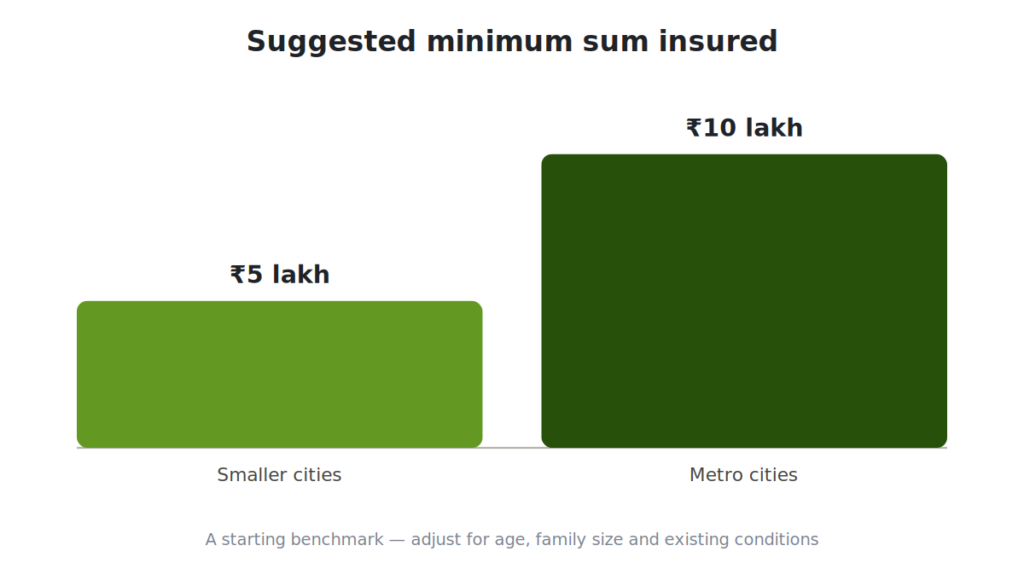
higher than in smaller towns. A common rule of thumb is a sum insured of
₹10 lakh or more for a metro family, while ₹5 lakh may stretch further
elsewhere. Then adjust for your family’s ages, any existing conditions
and how much you could pay out of pocket.
Here is a trick that saves money. Take a ₹5 lakh base policy and add a
₹20 lakh super top-up with a ₹5 lakh deductible. For a single
hospitalisation you would have about ₹25 lakh of cover in total, often
at a much lower combined premium than one ₹25 lakh policy. The super
top-up pays only after the claim crosses ₹5 lakh, which your base policy
covers first.
Why employer cover is not enough
Group insurance from your company is a bonus, not a plan. It ends when
you leave or retire, which is exactly when you may be older and a good
policy is harder to get. The sum insured is often modest and shared
across your family, and the terms can change every year. Keep a personal
policy of your own so your protection does not depend on your job.
The terms that decide whether your claim is paid
This is the part most people skip, and it is where many claims are won
or lost.
Waiting periods. Most policies have an initial wait of about 30 days for
illness claims (accidents are often covered from day one). Specific
treatments such as cataract, hernia or joint replacement often carry
waits of one to three years. For pre-existing conditions such as
diabetes or high blood pressure, IRDAI now caps the wait at three years.
Maternity cover often has its own wait of two to four years.
Room rent limit. Some policies cap the room you can choose, say ₹5,000 a
day. If you take a room costing ₹8,000, the insurer may reduce not just
the room charge but other charges in the same proportion. That can leave
you paying almost 40% of the doctors’ fees and other costs yourself.
Look for no cap, or a generous one.
Co-payment. You pay a fixed share of every claim, such as 10% or 20%. It
lowers the premium but costs you on each claim.
Sub-limits. Caps on specific treatments or expenses, for example
cataract surgery or ICU charges.
Pre and post-hospitalisation cover. Pays for tests before admission and
follow-ups after discharge. Look for roughly 30–60 days before and 60–90
days after.
Restoration and no-claim bonus. Restoration refills your sum insured if
you exhaust it in a year. A no-claim bonus increases your cover, often
by 5% to 50%, when you do not claim.
Moratorium. After 60 months of continuous cover, an insurer generally
cannot reject a claim for non-disclosure, except in cases of proven
fraud. It is a strong reason to renew on time and stay continuous.
Do not judge an insurer by premium alone
The cheapest policy is rarely the better. Look at the claim settlement
ratio (the share of claims settled), the incurred claim ratio (how much
of premiums is paid out as claims), the number and quality of network
hospitals near you, and how the insurer handles grievances. IRDAI
publishes annual data, and many comparison tools use it, so it is easy
to check.
How to make a claim with less confusion
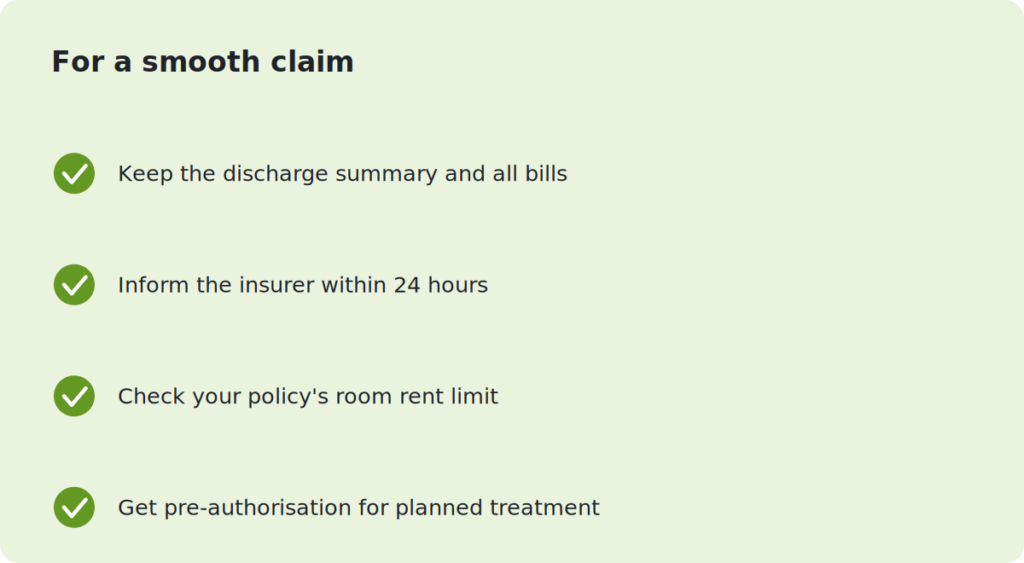
- For planned treatment, tell the insurer or the hospital’s insurance
desk in advance and get pre-authorisation for cashless. - For emergencies, inform the insurer within the time stated in your
policy, often within 24 hours of admission. - Keep every document: discharge summary, bills, prescriptions, test
reports and receipts. - If a claim is rejected, read the letter carefully. Write to the
insurer’s grievance officer first. If that fails, you can approach
the Insurance Ombudsman, which is free.
IRDAI has been pushing insurers towards faster cashless approvals, but
keep some cash or a credit card handy for the initial deposit.
Buying tips that pay off
- Buy early. Premiums rise with age; waiting periods start only once
covered. - Disclose everything honestly. Hiding a pre-existing condition is one
of the biggest reasons claims are rejected. - Read the policy wording, not just the brochure. The wording is the
contract. - Renew on time. Most policies allow a grace period of about 30 days,
but a break can reset waiting periods. - Use portability if you are unhappy. You can move to another insurer
and keep credit for waiting periods already served. Start well
before renewal, often 45–60 days.
Tax benefits under Section 80D
If you are on the old tax regime, you can claim a deduction under
Section 80D for health insurance premiums. Broadly, that is up to
₹25,000 for yourself, your spouse and children (₹50,000 for senior
citizens), plus up to ₹25,000 for your parents (₹50,000 if they are
senior citizens). The new regime does not allow this deduction, and GST
on individual health policies was removed in September 2025, so confirm
both on your quote.
Frequently asked questions
Is health insurance worth it if I am young and healthy? Yes. Premiums
are lowest now, waiting periods start counting down early, and accidents
and sudden illness do not check your age.
Family floater or individual policies? A floater is cheaper and suits
young families. As parents age, separate policies for them often make
more sense.
Can a claim be rejected after I buy? Yes, if the treatment is excluded,
falls within a waiting period, or if relevant information was not
disclosed.
Key takeaways
Health insurance is not exciting, and you hope never to use it. But it
protects everything else you are building. A good policy has adequate
cover for where you live, sensible waiting periods, no harsh room rent
limit and an insurer with a record of paying claims. Buy it while you
are healthy, be honest in your proposal, and review it every year or two
as your family changes.
Editorial note: Rates, fees, tax rules and regulatory requirements can
change. Check the current terms that apply to you before acting.
Disclaimer: This article is for general information only and is not
financial, tax or legal advice. Rates, fees and rules change, so check
the lender’s or insurer’s current terms and consult a qualified
professional before you decide.
 Life Insurance
 in India: Why Term Plans Come First
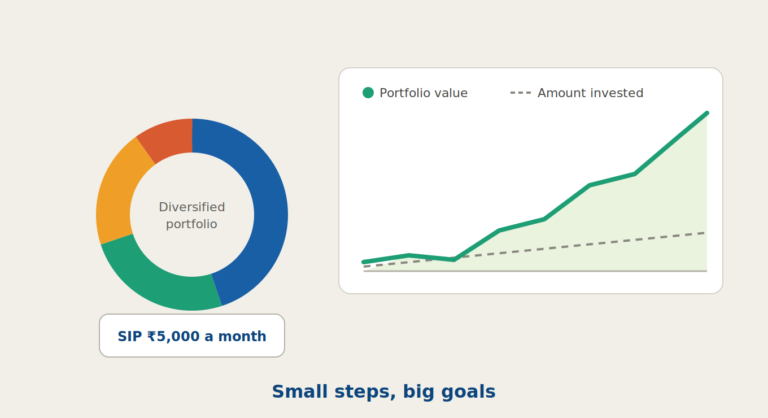 Mutual Funds
 in India: A Beginner’s Guide to Investing Through SIPs
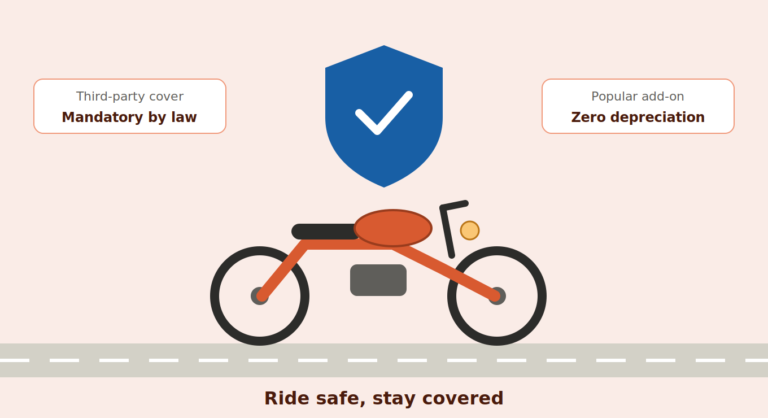 Bike Insurance
 in India: What Every Two-Wheeler Owner Should Know
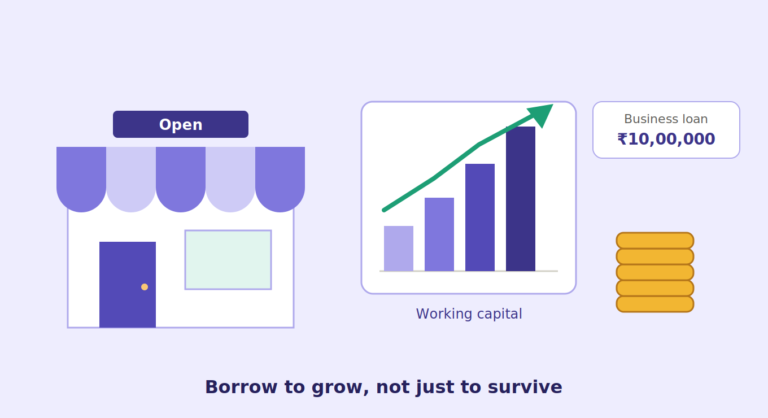 Business Loan
s in India: How Small Businesses Can Borrow Smartly
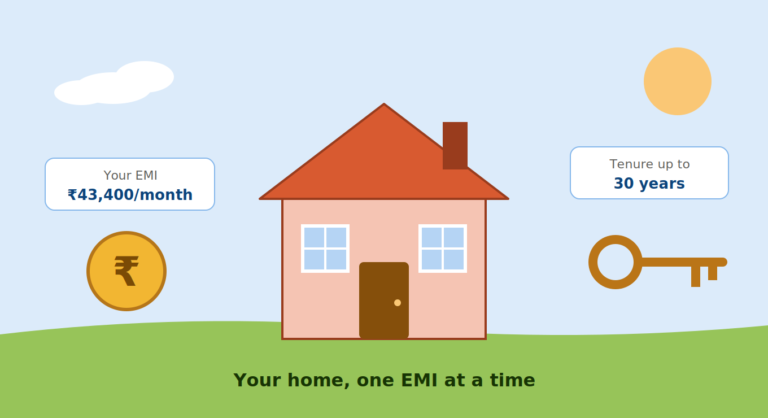 Home Loan
s in India: A Buyer’s Guide to Rates, EMIs and Hidden Costs
 Chit Fund
s in India: How They Work and How to Stay Safe
 Gold Loan
s in India: Quick Cash Against Your Jewellery, Explained
 Credit Cards
Comments